- Oct 2, 2024
27 Violin Bowing Techniques with Examples & Symbols
- Meghan Faw
- 0 comments
Be sure to download the free chart with all 27 bowing technique definitions and musical symbols!
Beginner Bowing Techniques
Detache
Detache is the most basic violin bow stroke and likely very first one that you learned or will learn! Detache means to change bow directions on each note. The name is slightly misleading because it sounds like "detached" which could indicate that there should be a separation between each note; however, notes played with the detache bow stroke should be completely smooth. Detache requires no special symbol or marking.

Legato
Legato refers to notes underneath a slur. Slurs (as seen below) are curved lines that indicate all of the notes underneath should be played in the same bow direction.
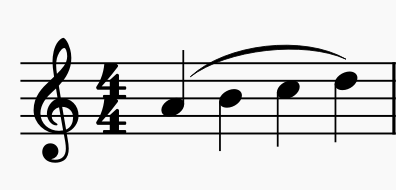
Since legato notes are performed in the same bow direction, the notes will sound smooth and not have any breaks between them. Notes that are meant to be played smoothly while switching bow directions are not legato; they are detache.
Staccato
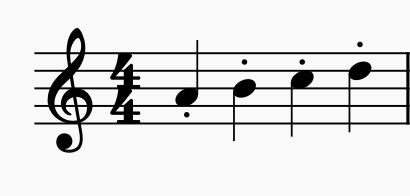
Staccato means "detached" in Italian, and indicates that the notes should have a clear space between them. In my experience, staccato is the violin bow stroke that is most often misunderstood or over complicated by beginner violin students. To perform staccato, simply stop the bow between each note. There should be a clear space, or a moment of silence, between each note. Staccato is notated by dots over and/or under the notes.

Tenuto
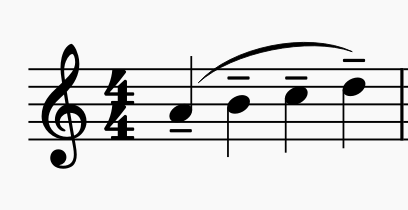
I like to think of tenuto as the opposite of staccato. Tenuto notes should be held for their full value but still be clearly separated. These notes should be played longer than staccato but not as smoothly as detache.

Portato
Portato is a combination of legato and tenuto. Portato notes should be played in the same bow direction, but should have a bit of separation between them. Portato is performed by changing bow speed within the same bow stroke. Move the bow fast at the beginning of the note, and allow it to slow down at the end of the note, creating the separation.
Pizzicato
Pizzicato notes are plucked with the finger rather than drawn with the bow. To perform pizzicato, place your thumb at the base of the fingerboard and use your index finger to pluck the string in an upwards motion over the fingerboard.

Arco
Arco simply means to return to playing with the bow. It most often occurs after a pizzicato section.

Punta d'Arco
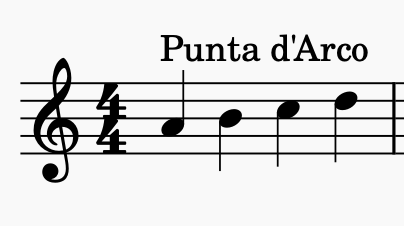
Punta d'Arco means that the notes should be played at the point (tip) of the bow. This creates a soft tone.
Au Talon
Au Talon means that the notes should be played at the frog (heel) of the bow. This creates a very strong and loud tone.

Brush Stroke
Brush stroke is the easiest off-the-string violin bow stroke. Brush stroke works best in the middle and lower parts of the bow. To perform brush stroke, start with your bow above the string, and then create a "U" shaped motion with your hand, allowing the bow to come into contact with the string at the bottom of the U. Brush stroke is an active bow stroke, meaning that each movement of the bow is actively controlled by the player.
Intermediate Bowing Techniques
Spiccato
Spiccato is an off-the-string bow stroke where the bow bounces off the string after each note. Spiccato is primarily performed around the balance point of the bow, which is slightly below the middle. Unlike brush stroke, spiccato is a partially or entirely passive bow stroke, depending on the speed. This means that the bow hand and arm stay completely relaxed and the bow bounces on its own.
Up Bow Staccato
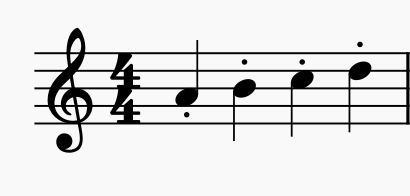
Up bow staccato is a series of notes all played up bow with space in between them. In advanced repertoire, there are usually between 16-32 (and sometimes more!) notes to be played up bow staccato all in one bow. To perform up bow staccato, place your bow on the string in the upper half and apply a hefty amount of weight into your right index finger. As soon as you move the bow, release the weight. This creates a crisp accent at the beginning of the note and a beautiful, ringing sound at the end of the note.

Down Bow Staccato
Down bow staccato is performed in the same way as up bow staccato, just on a down bow instead of an up bow! I think that down bow staccato is harder because you are working against gravity.
Col Legno
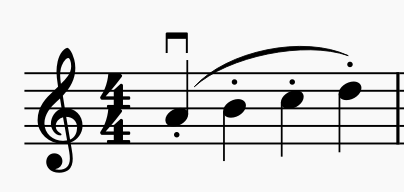
Col legno means to play with the stick of the bow. To perform col legno, tilt the bow hair away from you and the bow stick towards you. This creates a percussive sound. Col legno is rarely found in solo repertoire, but sometimes used in orchestral works.

Sul Tasto
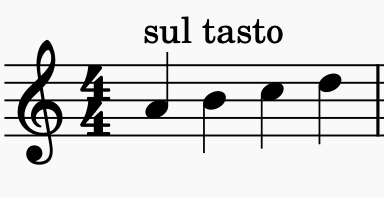
Sul tasto means to play over the fingerboard. This creates a soft, light, and airy sound.
Ponticello
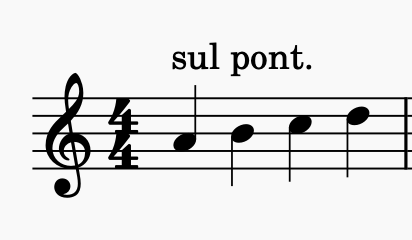
Ponticello is the opposite of sul tasto: it means to play over the bridge. This creates a scratchy and unclear sound, which is most often used in orchestral repertoire.
Double Stops
Double stops are when two notes sound at once. To play a double stop, be sure that your arm is balanced in between the two strings and that your hand moves in a straight line. If the hand wobbles up and down, it won't sound like a double stop! Be careful not to add too much pressure into the bow when playing double stops.
Chords
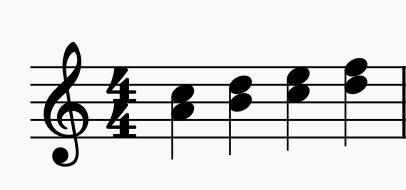
Chords (also called triple stops or quadruple stops) involve playing two or three notes together. When playing chords, start with your bow on the lower two notes, and then quickly roll it to the top two notes. You may not be able to play all of the notes exactly simultaneously (especially when there's four notes), but you'll roll the bow across the strings quickly to create the illusion of playing them all at once.

Bowed tremolo
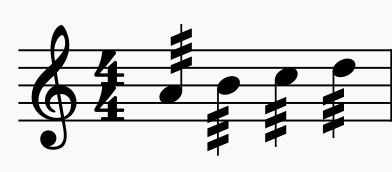
Tremolo means to rapidly repeat a note as many times as possible within the note value. Tremolo is most often performed in the upper half of the bow, using about a 1/4 inch of bow, but it can be done in the middle of the bow using about half of the bow if written within a forte dynamic. Tremolo is most often found in orchestral repertoire because of the special effect it creates.
Martele
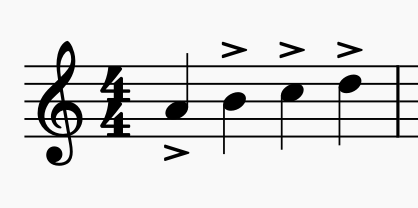
Martele (meaning "hammered") is a bow stroke that means to play the notes with a percussive articulation. Notes should be detached, but have a heavy accent or bite at the beginning of the note. Martele isn't as smooth as detache or as detached as staccato; it's somewhere in between. To perform martele, apply a significant amount of weight into the bow with the index finger. As you draw the bow, release the weight so that the sound is clear.
Sustained martele
Sustained martele is a violin bow stroke requiring the note to be held out for it's full value after the initial accent or attack of the martele stroke.
Marcato
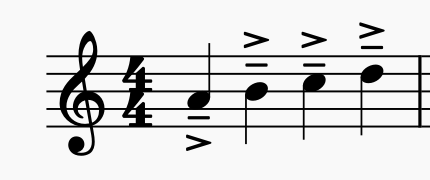
The term marcato comes from the Italian word for "marked". Unlike martele which is a bow stroke, marcato is simply an articulation that means to play the notes with an accent or louder than those around it. Usually marcato is not as firm as martele.

Advanced Violin Bowing Techniques
Sautille
Sautille is a violin bow stroke where the the bow hair stays completely on the string while the stick bounces up and down. Sautille is best performed around the balance point of the bow, and requires the right hand to be extremely relaxed and flexible. Sautille is a passive bow stroke, meaning that as long as the player stays relaxed, the bow stick will bounce by itself.
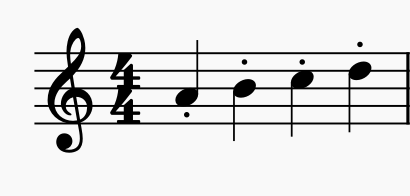
How do I know whether to use staccato, brush stroke, spiccato or sautille?
Great question! Since all four of these bowing techniques are notated by dots over and/or under the notes, how do you know which one to use at any given time?
It all comes down to the speed of the piece. For slower passages, use staccato, for medium speed use brush stroke, for fast passages use spiccato, and for extremely fast passages, use sautille.
Ricochet
Ricochet is another passive violin bow stroke. Ricochet is most often done in the upper half of the bow, and involves "throwing" (or dropping) the bow onto the string and allowing the bow to bounce (or ricochet, if you will 😅) on its own. Ricochet is most often used for extremely fast passages.

Flying staccato
Flying staccato is a cross between up bow staccato and flying spiccato (covered next). In the flying staccato violin bow stroke, the bow leaves the string between martele notes during a single bow stroke. This is a semi-passive bow stroke, where the player must control the height and frequency of the bounce.
Flying spiccato
Flying spiccato is a violin bowing technique that involves playing a series of spiccato notes in the same direction, most often on an up bow. Flying spiccato works best in the middle of the bow. To perform flying spiccato, start with the bow off the string and drop it onto the string, allowing it to rebound, like jumping on a trampoline.
How do you know whether to use up bow staccato, flying staccato, flying spiccato, or ricochet?
Great question! Since all 4 of these violin bow strokes are notated by slurs and dots over the notes, it can be hard to determine which is which. Similar to staccato, brush stroke, spiccato, and sautille, which bow stroke you use depends on the tempo. Up bow staccato is the slowest (although certainly not slow!), then flying staccato, and then flying spiccato. Ricochet is the fastest since it is the most passive, however, music will most likely tell you when to incorporate ricochet.
Chops
Chopping is a percussive bowing technique most often used in fiddle tunes. To perform a chop, heavily drop the bow on to the string in the lower half. Chops are most often followed by a rest, where you would lift the bow off the string and repeat the process.

Don't forget to download your free PDF chart of all the bowing technique definitions and musical symbols!