- Oct 13, 2024
Violin Fingering Chart
- Meghan Faw
- 0 comments
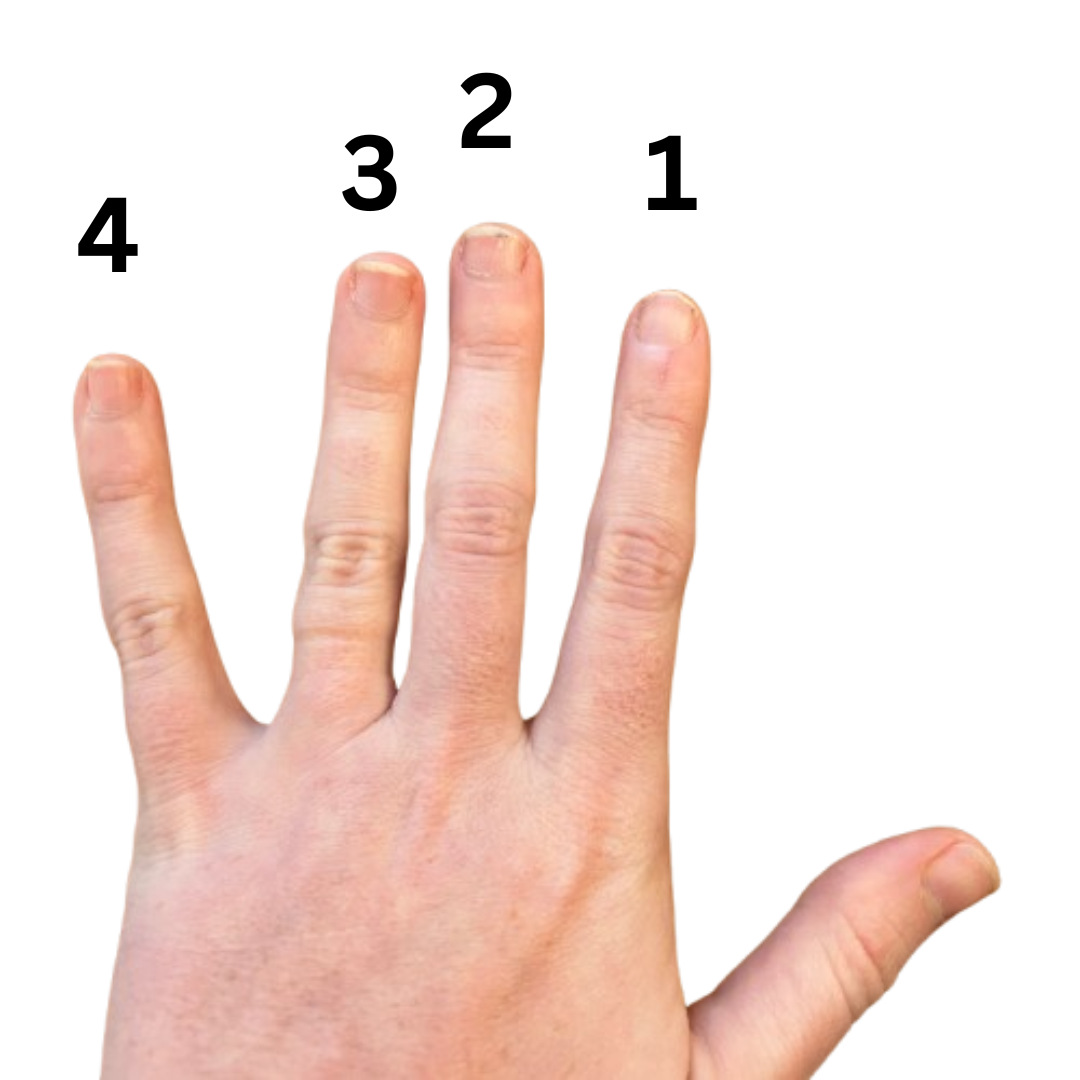
Below, you will see the notes on the violin in first position. First position is the lowest position on the violin, and the first one that you’ll learn as a beginner violinist. When playing the violin, you will use four fingers. The index finger is your first finger, the middle finger is your second finger, the ring finger is your third finger, and the pinky is your fourth finger.
In music, there are seven possible core notes: A, B, C, D, E, F, & G. Notes are related to each other by half steps and whole steps. Half steps are when the notes are right next to each other, and whole steps are when they have one note in between.
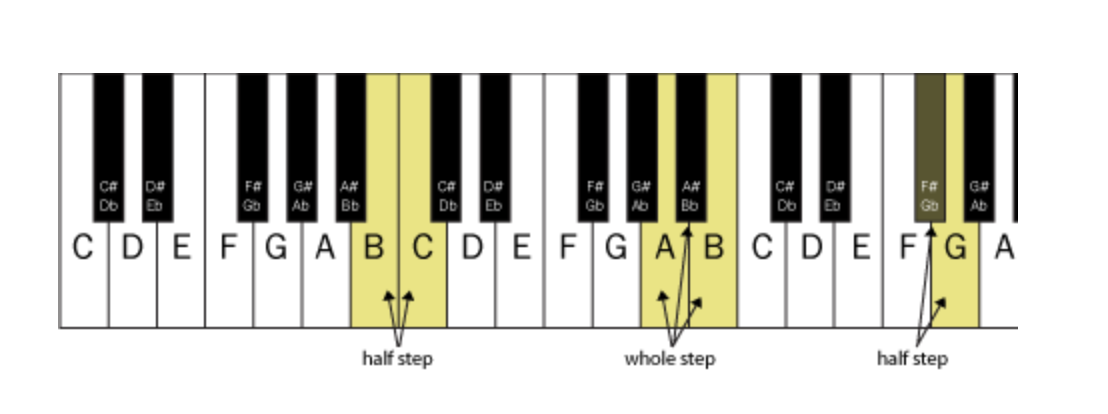
Each of the seven core notes have three variations: flat, natural, and sharp. A flat (indicated by the "b" symbol) means to lower the note by one half step. A natural means to play the note as is, and a sharp (indicated by the # symbol) means to raise the note by one half step.
Violin Fingering Chart
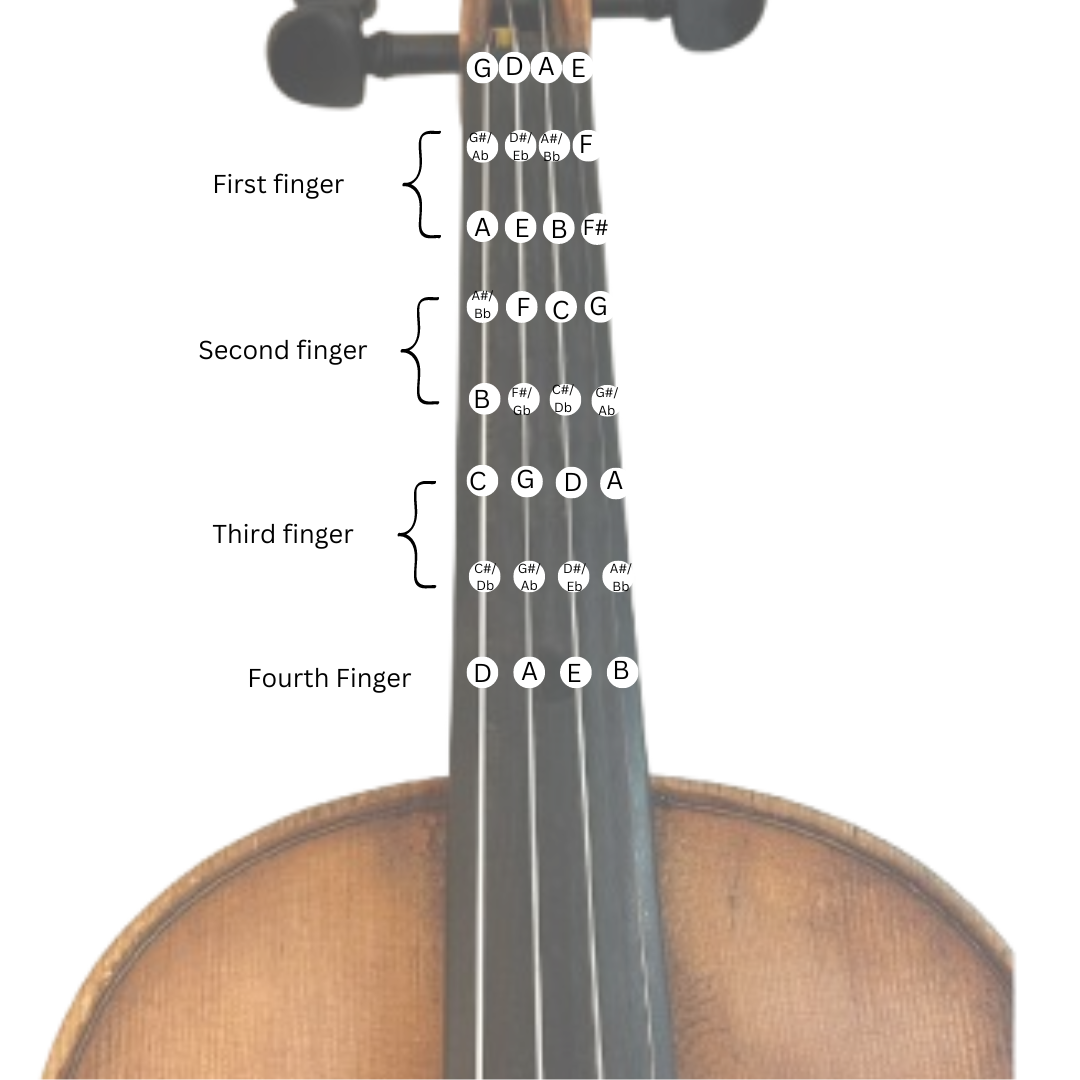
High VS Low
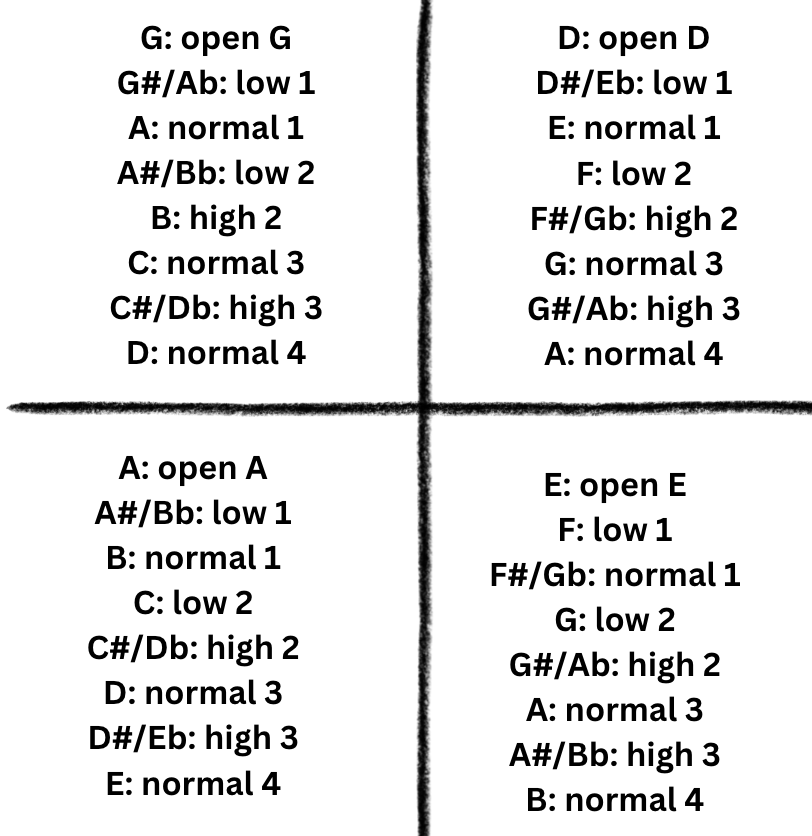
As you can see, there are several different placements for each finger, which we refer to as "low" (closer to the scroll), "normal", or "high". If you are using finger tapes, your finger placements are normal 1, high 2, normal 3, and normal 4. The high 2nd finger and normal third finger will be touching.
Enharmonic Tones
As you can see, some of the finger placements on the violin fingering chart above have two note options. These are called enharmonic tones. Enharmonic tones are notes that are the same pitch but can be spelled differently. For example, looking at the piano chart above, you can see that the black key directly to the right of the yellow highlighted C key can either be notated as a C# (a higher C), or a D flat (a lower D), but the note is the same. Composers (people who write music) will choose which one to use based on the key of the piece and the chord that they are notating.
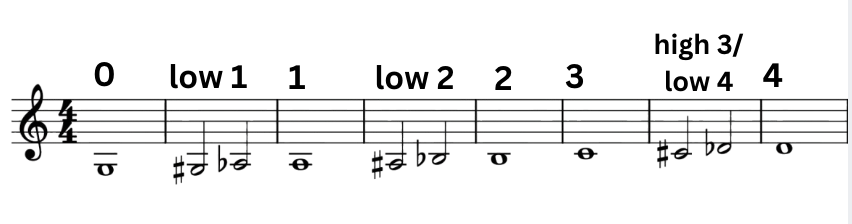
Violin Music Notation in First Position
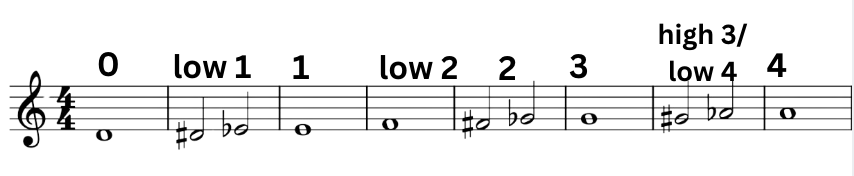
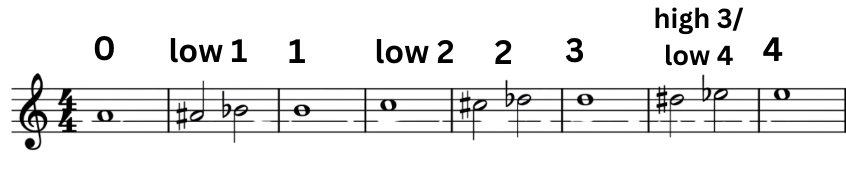
The measures with 2 notes in them are the enharmonic tones.
G string
D string
A string
E string
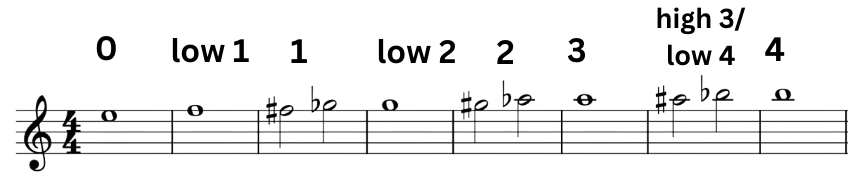
In the second to last measure of each string, those notes can be played with either a high 3rd finger or a low 4th finger. Typically, violinists will use the high third finger if the note is written as a sharp, and a low fourth finger if the note is written as a flat.
How do you know when to play in first position?
The great majority of beginner songs like Twinkle Twinkle Little Star, Ode to Joy, Mary Had a Little Lamb, etc. are all written in first position.
Example of violin first position
G, D, A, and E string violin notes in first position
Questions about violin music notation or violin notes in first position? Leave a comment and let me know!